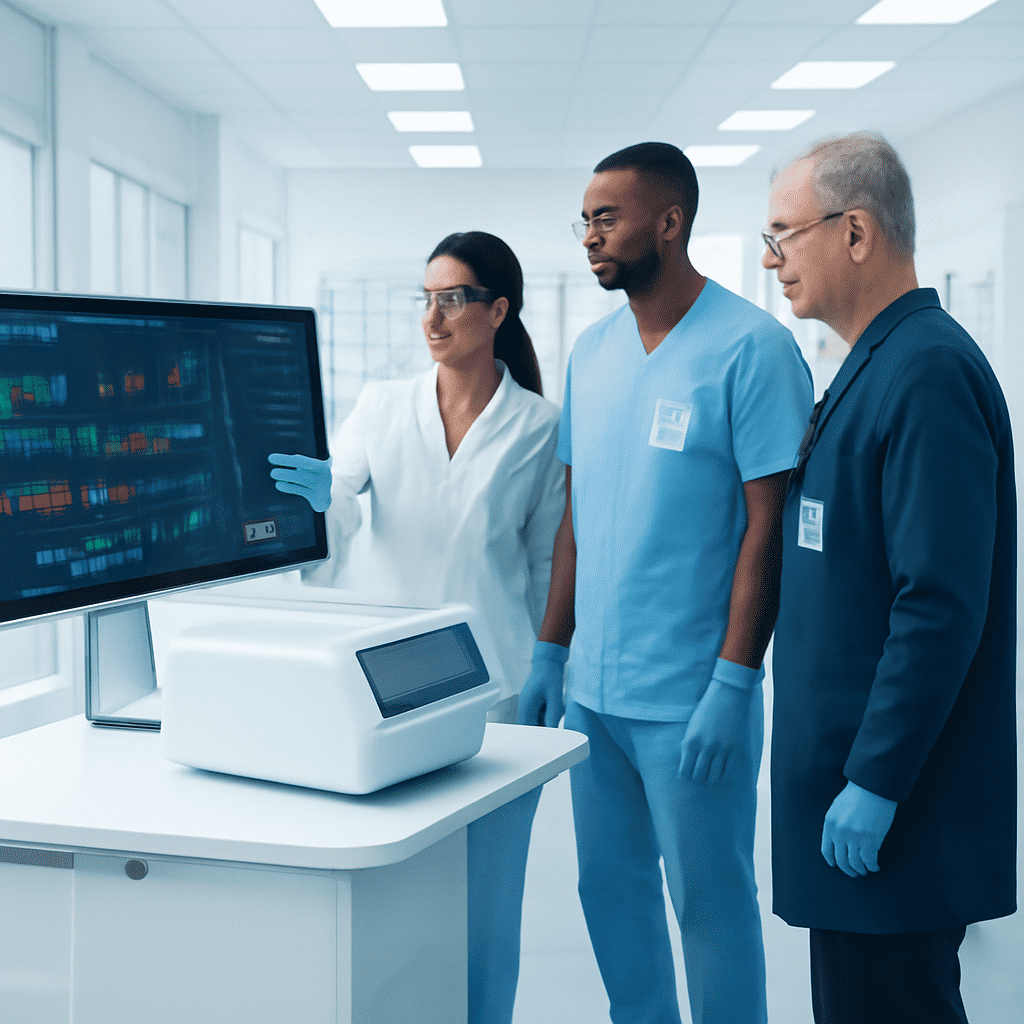
Artificial intelligence (AI) is reshaping numerous industries, and perhaps its most transformative impact is being felt in healthcare diagnostics. The integration of AI into the diagnostic process is turning what was once a labor-intensive task into a more efficient, accurate, and insightful process. This revolution holds the potential to significantly enhance patient outcomes, streamline healthcare operations, and drive cost efficiency.
One of the primary advantages of AI in healthcare diagnostics is its ability to speed up the diagnostic process. Traditionally, diagnosing medical conditions could take days or even weeks, especially when involving complex imagery like MRIs or CT scans. Now, AI-driven systems can analyze these images in a fraction of the time, quickly identifying patterns or anomalies that a human might miss. This rapid analysis is crucial in critical care settings where time is of the essence, enabling healthcare providers to initiate treatment more quickly and improve patient prognoses.
AI's accuracy in diagnostics is another groundbreaking benefit. Technologies such as machine learning algorithms have been trained on vast datasets, allowing them to identify abnormalities with remarkable precision. For instance, AI systems have been shown to match or even exceed the diagnostic accuracy of human radiologists in screening for diseases such as breast cancer and pneumonia. This level of accuracy translates to early detection of diseases, often increasing the chances of successful treatment and reducing the burden of late-stage disease management.
Moreover, AI can assist in diagnosing conditions that exhibit subtle or complex symptoms, often challenging even for seasoned physicians. Natural language processing (NLP) tools can sift through electronic health records, extracting relevant patient history information, and suggest possible conditions based on the aggregated data. This deep analysis supports healthcare professionals in making informed decisions, reducing the margin for error and misdiagnosis.
In addition to improvements in speed and accuracy, AI is making diagnostics more accessible, especially in underserved or remote areas. Portable AI diagnostic tools can be brought to communities with limited access to healthcare facilities, offering on-site testing and analysis. This democratization of healthcare technology ensures that more individuals receive timely and appropriate medical evaluations, bridging significant gaps in healthcare equity.
Furthermore, AI's integration into diagnostics is also helping to personalize medicine. By analyzing an individual's medical data against broader databases, AI systems can provide insights into how certain treatments might work more effectively for specific patients. This personalized approach supports the development of targeted therapies, reducing trial and error in treatment plans and enhancing overall patient care.
However, the integration of AI into healthcare diagnostics is not without its challenges. Concerns about data privacy, the need for large and diverse datasets to train AI systems adequately, and the potential for biases encoded into algorithms are critical issues that must be addressed. Ongoing collaboration between technologists, healthcare professionals, and policymakers is essential to ensure the ethical and effective utilization of AI in this sensitive field.
In conclusion, AI is revolutionizing healthcare diagnostics by offering faster, more accurate results, enhancing patient care, and providing crucial support in medical decision-making. As technology continues to evolve and become more integrated into the medical world, it holds the promise of significantly improving healthcare outcomes while making diagnostics more accessible and efficient. It is an exciting time for healthcare, with AI poised to transform diagnostics for the betterment of patient care globally.